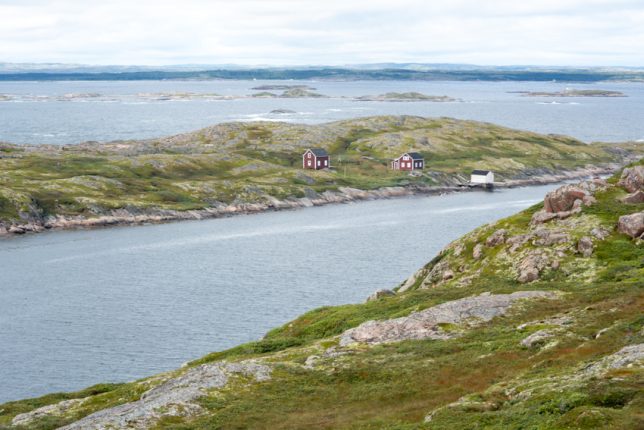
Quebec’s Lower North Shore, or Basse-Côte-Nord, is one of Canada’s more remote and little-known coastal regions. Stretching eastward along the Gulf of St. Lawrence toward Labrador, it is a rugged landscape of rocky islands, windswept boreal forests, and isolated fishing communities, many of which remain inaccessible by road.
I published two articles about this really interesting region, based on a journey I made along its coast. One was a reported feature for Al Jazeera English examining the economic and demographic challenges facing its communities. The other was a longer, more personal travel narrative for explore magazine, describing the journey itself and the people and places I encountered along the way.
For generations, the Lower North Shore’s fishing villages have depended on the sea for their livelihoods and connections to the outside world. But the decline of the commercial fishing industry, combined with limited employment opportunities and geographical isolation, has led to a steady departure of residents, particularly younger people.
One of the region’s most contentious issues has long been the incomplete Route 138, the highway that follows Quebec’s north shore before abruptly ending at the town of Kegaska. It resumes hundreds of kilometres farther east, near the Labrador border, leaving numerous communities between the two points without a direct road connection to the rest of the province.
For my Al Jazeera feature, “Route 138: Saving Quebec’s ‘Forgotten People’“, I spoke with residents about their struggle to maintain their communities, the difficulties of attracting visitors and investment, and their hopes that a completed highway might help reverse the region’s decline.
My longer travel feature, “Quebec’s Lost Coast“, published in the Spring 2016 issue of explore magazine, offers a different perspective on the region.
Travelling aboard the coastal supply ship Bella Desgagnés, I visited communities including St. Augustine, Pakua Shipi, Blanc-Sablon and Kegaska. While there, I encountered a distinctive mix of English-speaking, French-speaking, Acadian and Innu communities, each with its own history and relationship to the surrounding land and sea. The journey took me into remote river valleys and fiqshing settlements, and introduced me to residents working to preserve their communities and ways of life.
Although the two articles approach the Lower North Shore from different perspectives, both look at the same underlying question: What becomes of remote communities when the economic foundations that once sustained them begin to disappear?
You can read the original reporting in Al Jazeera and the full travel narrative from explore through the links above.